There's a reason experienced gardeners talk about timing more than anything else. You can have the best soil, the sunniest spot, and the most carefully chosen seeds — but sow them at the wrong moment, and you'll be fighting an uphill battle all season.
The good news? Getting it right isn't complicated. It just takes a little planning.
Gardening isn't about doing everything perfectly — it's about doing the right thing at the right time.
At a Glance
This month-by-month sowing calendar walks UK gardeners through every key planting window from February to June. Starting on the windowsill in February with heat-loving crops like tomatoes, peppers, and aubergines, you build momentum through March with salad leaves, broad beans, and herbs before hitting the main sowing season in April when most seeds can go in. May opens up direct outdoor sowing for sweetcorn, cucumbers, and quick-growing radishes, while June offers a final window for succession sowings and winter-harvest crops like kale. Each month includes germination temperatures, sowing depths, spacing guidance, and common beginner mistakes to avoid. Whether you are working with a single windowsill or a full vegetable plot, timing your sowings to match UK conditions is the single most important thing you can do — and the GardenPack app calculates it all automatically based on your postcode.
Why Timing Matters More Than You Think
Every seed has a temperature range where it germinates best. Sow too early into cold soil and seeds will sit dormant — or worse, rot. Sow too late and your plants won't have enough growing season to produce a decent harvest.
The UK's climate makes this especially tricky. A warm spell in March can tempt you into sowing outdoors, only for a late frost to wipe everything out. That's why understanding the rhythm of the seasons is your single biggest advantage as a grower.
Your local microclimate matters. If you're in the north of England or Scotland, shift these dates forward by 2-3 weeks. GardenPack adjusts automatically based on your postcode.
Your Month-by-Month Sowing Guide
February — The Windowsill Start
February is for indoor sowing only. Your windowsill or a simple propagator is all you need. Outside, the soil is still far too cold and waterlogged for seeds to do anything useful, so resist the urge to get ahead of yourself outdoors.
Tomatoes — Sow indoors in small pots or modules, pressing seeds 0.5cm deep into moist seed compost. Tomatoes germinate best at 18–21°C and take 7–14 days to emerge. Pot on into 9cm pots once seedlings have their first true leaves. A common mistake is using pots that are too large — small containers keep compost warmer and reduce the risk of damping off.
Peppers & Chillies — Start early as these need a long growing season to ripen in the UK. Sow 1cm deep at 21–25°C; germination takes 10–21 days. Peppers are slower than tomatoes at every stage — many beginners give up too early and throw away pots that would have sprouted with another week of warmth. Pot on into 9cm pots once they have two true leaves.
Aubergines — Another slow starter that benefits from an early indoor sow. Germination temperature is similar to peppers (21–25°C) and they need consistent warmth. Sow 1cm deep and expect 14–21 days to germination. Keep them in the warmest, brightest spot you have — temperatures below 15°C at night will stall growth completely, which is the most common beginner mistake with this crop.
Keep all February seedlings on a bright windowsill and turn pots daily to prevent leggy growth. A south-facing window is ideal. If your sill is cold at night, move trays somewhere warmer and return them to the light each morning.
March — Building Momentum
March is when things get exciting. You can start more seeds indoors and, towards the end of the month, begin hardening off your earliest sowings. But don't be tempted to sow outdoors too early — a late frost can kill tender seedlings overnight, and soil temperatures are still below what most seeds need.
Lettuce & Salad Leaves — Sow thinly in trays or modules indoors, barely covering the seed (about 0.5cm). Lettuce germinates at cool temperatures — 10–15°C is ideal, and above 25°C germination actually drops. Thin to 15–25cm apart. The most common beginner mistake is sowing too thickly, which leads to spindly, overcrowded plants that bolt.
Broad Beans — These tough plants can go directly outside in mild areas. Sow 5cm deep and 20cm apart in double rows. They germinate at just 5–10°C, making them one of the earliest outdoor crops. The main beginner mistake is forgetting to pinch out the growing tips once the first pods set — this discourages blackfly and directs energy into the beans.
Peas — Start in guttering or root trainers indoors for transplanting later. Sow 3–5cm deep and 5cm apart. Peas germinate at 8–15°C and need support as they grow — even short varieties benefit from twiggy sticks or netting. Space rows 60cm apart when transplanting.
Herbs (Basil, Coriander, Parsley) — Sow indoors on a warm windowsill. Basil needs warmth (15–20°C) and light — surface-sow and press gently into compost without covering. Coriander bolts in heat, so sow 1cm deep and keep below 20°C. Parsley is notoriously slow (up to 4 weeks to germinate), so don't give up on it.
April — The Main Event
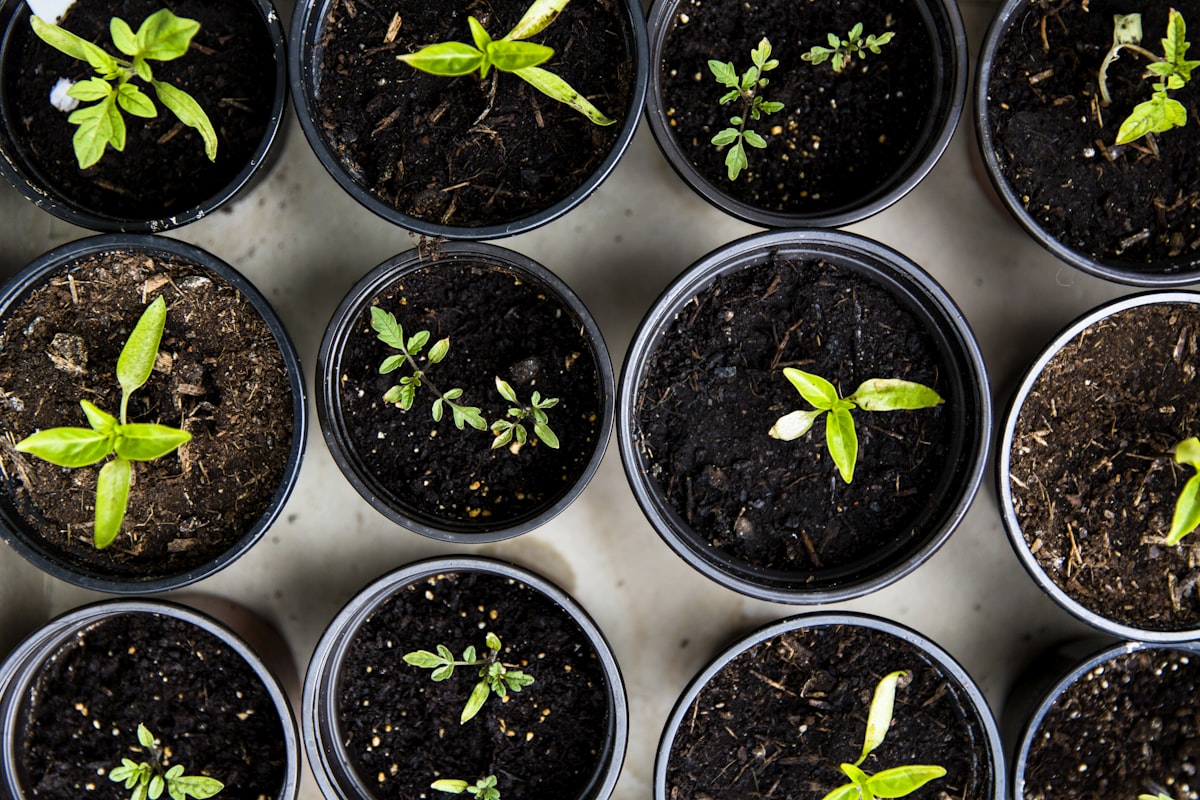
April is the busiest sowing month. Most of your Garden Pack seeds can go in now, either indoors or directly outside. Soil temperatures are climbing towards 10–12°C in southern England, unlocking direct outdoor sowing for a wide range of crops.
Courgettes & Squash — Sow indoors in individual 9cm pots, placing seeds on their side about 2cm deep. They germinate at 18–21°C and grow fast. Courgettes hate root disturbance, so sow in individual pots rather than trays. Space plants 90cm apart when planting out after the last frost. A common mistake is sowing too early and ending up with leggy plants stuck indoors.
French Beans & Runner Beans — Start indoors in deep pots or root trainers, sowing 5cm deep. Beans germinate at 12–18°C and are frost-sensitive, so don't plant out until all risk has passed. Space climbing varieties 15cm apart along a sturdy support — a wigwam of canes at least 2m tall is traditional.
Beetroot — Direct sow outside in rows, 2–3cm deep and 10cm apart. Each beetroot "seed" is actually a cluster, so thin to one seedling per station. Beetroot germinates at 7–15°C and is forgiving — great for beginners. Harvest at golf-ball size for the sweetest flavour; larger roots turn woody.
Carrots — Direct sow into fine, stone-free soil in drills 1cm deep. Thin to 5–8cm apart. Carrots germinate at 7–15°C but can take up to 3 weeks. Never transplant them — disturbed roots fork. The most common mistake is sowing into heavy or stony soil, which produces misshapen roots.
Spring Onions — Direct sow in short rows every 3 weeks for a continuous harvest. Sow 1cm deep and thin to 2–3cm apart. They germinate at 10–15°C and are ready in 8–10 weeks — one of the easiest crops for beginners.
Not sure when your last frost date is? In most of southern England it's mid-April. In the Midlands and North, it's usually early to mid-May. GardenPack uses local weather data to tell you exactly when it's safe.
May — Full Speed Ahead
By May, the soil has warmed to 12°C or above across most of the UK and you can sow almost everything directly outdoors.
Sweetcorn — Direct sow in blocks (not rows) for better wind pollination, placing seeds 4cm deep and 35–45cm apart. Sweetcorn germinates at 10–16°C but really thrives once soil hits 15°C. The most common mistake is sowing in a single long row — sweetcorn is wind-pollinated, so a block of at least 3x3 plants gives far better cob fill.
Cucumbers — Sow indoors or in a greenhouse, placing seeds on their side 2cm deep in individual pots at 20–25°C. They germinate quickly in warmth (5–7 days) but are very frost-tender. Outdoor varieties can go out in late May under fleece. Space plants 45–60cm apart and provide support for climbing varieties. A common mistake is overwatering — keep compost moist but not soggy.
Sunflowers — Direct sow where you want them to flower, pushing seeds 2cm deep and spacing 30–45cm apart. Sunflowers germinate at 15–20°C and grow fast. They make a brilliant first crop for children and beginners because the results are so visible. Protect young seedlings from slugs with a cut plastic bottle cloche over each one.
Radishes — Quick wins, ready in just 4 weeks. Sow 1cm deep and thin to 3cm apart. Radishes germinate at 7–18°C and are almost impossible to get wrong. Sow a short row every 2 weeks for a steady supply.
This is also the time to transplant seedlings you started earlier. Harden them off for a week before planting out — move them outside during the day and back in at night. Skipping this step is one of the most common causes of transplant failure.
Try Garden Pack for free
Scan your seed packets, get personalised sowing reminders, and grow with confidence — all from your phone.
Download Garden Pack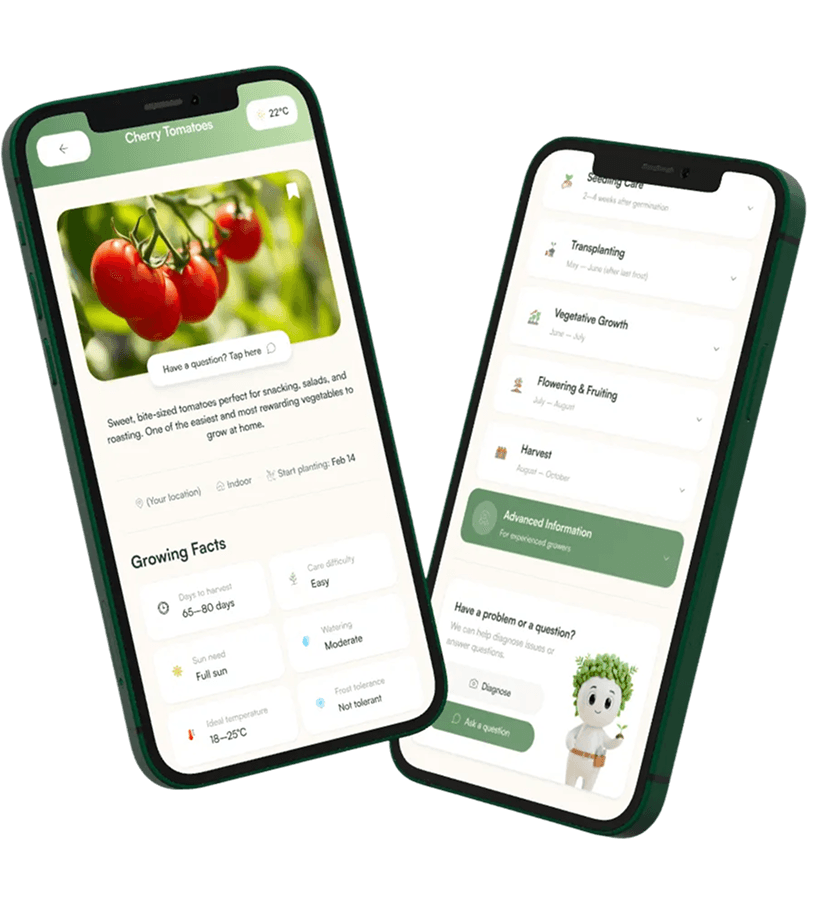
June — Last Chance Sowings
June isn't too late for plenty of crops. In fact, some do better with a later sowing when the soil is warm and days are long. Don't fall into the trap of thinking the sowing season is over.
Second sowings of lettuce, beetroot, and spring onions — Succession sowing extends your harvest into autumn. Sow lettuce every 2–3 weeks using bolt-resistant varieties. Beetroot sown now will be ready in September. The biggest mistake is doing one big sow in spring and ending up with a glut followed by nothing.
Kale — Sow now for autumn and winter harvesting, 1–2cm deep in modules. Transplant to 45cm apart once plants have 4–5 true leaves. Kale germinates at 10–20°C and is remarkably cold-hardy — it tastes sweeter after a frost. Net against pigeons and cabbage whites.
Turnips — A quick crop ready in 6–8 weeks. Sow 1cm deep, thinning to 15cm apart. Turnips germinate at 10–20°C and do best when grown fast with plenty of water. Harvest young for the best flavour.

How GardenPack Takes the Guesswork Out
Remembering all these dates — and adjusting them for your location — is exactly the kind of thing an app does better than a human brain.
When you scan a Garden Pack seed packet with GardenPack, it:
- Identifies the exact variety you're growing
- Calculates your ideal sowing window based on your postcode and current weather
- Sends you a reminder when it's time to sow
- Guides you step-by-step through sowing, potting on, hardening off, and transplanting
No more checking calendars or googling frost dates. Just scan, follow, and grow.
Try Garden Pack for free
Scan your seed packets, get personalised sowing reminders, and grow with confidence — all from your phone.
Download Garden Pack
The GardenPack Team
The GardenPack team combines RHS-trained horticultural expertise with app development to help UK gardeners grow with confidence. Our growing guides are reviewed by experienced allotment holders and tested across UK climate zones.